

Click here for a topical index of quotes
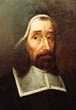
Richard Baxter
"We are the nurses of Christ's little ones. If we forbear taking food
ourselves, we shall famish them; it will soon be visible in their leanness, and dull
discharge of their several duties. If we let our love decline, we are not like to raise up
theirs"(Baxter, The Reformed Pastor , 61).
"Take heed . . . The devil is a greater scholar than you"(Baxter, The
Reformed Pastor , 74).
"If our words be not sharpened, and pierce not as nails, they will hardly be felt by
stony hearts. To speak slightly and coldly of heavenly things is nearly as bad as to say
nothing of them at all"(Baxter, The Reformed Pastor , 117).
"Our whole work must be carried on under a deep sense of our own insufficiency, and
of our entire dependence on Christ . . . Prayer must carry on our work as well as
preaching; he preacheth not heartily to his people, that prayeth not earnestly for them.
If we prevail not with God to give them faith and repentance we shall never prevail with
them to believe and repent"(Baxter, The Reformed Pastor , 122).
"Oh, speak not one cold or careless word about so great a business as heaven or
hell"(Baxter, The Reformed Pastor , 174).
"The plainest words are the profitablest oratory in the weightiest
matters"(Baxter, Works , II:399).

Alistair Begg
"Christian faith does not grant immunity from sadness and sickness, from
bereavement and disappointment. At least not now! Those who suggest that it does mean the
present enjoyment of health and wealth and peace and prosperity appeal to the general
desire for wellbeing that marks our culture. But such a story is neither true to the Bible
nor to human experience"(Begg, What Angels Wish They Knew , 195).
"The truth is that more spiritual progress is made through failure and tears than
success and laughter"(Begg, Made For His Pleasure , 106).
"We should neither court suffering nor complain about it. Instead, we should
see it as one of the means God chooses to employ in order to make us increasingly useful
to the Master"(Begg, Made For His Pleasure , 109).
"the idea that there are really no substantive differences between religions
needs to be held up to careful scrutiny and declared fraudulent. For example, Islam says
that Jesus was not crucified. Christianity says He was. Only one of us can be right.
Judaism says Jesus was not the Messiah. Christianity says He was. Only one of us can be
right. Hinduism says God has often been incarnate. Christianity says God was incarnate
only in Jesus. We cannot both be right. Buddhism says that the world's miseries will end
when we do what is right. Christianity says we cannot do what is right. The world's
miseries will end when we believe what is right"(Begg, Made For His Pleasure
, 126).
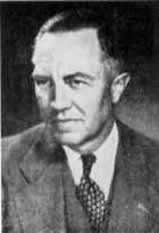
Loraine Boettner
"Although the sovereignty of God is universal and absolute, it is not the
sovereignty of blind power. It is coupled with infinite wisdom, holiness and love. And
this doctrine, when properly understood, is a most comforting and reassuring one. Who
would not prefer to have his affairs in the hands of a God of infinite power, wisdom,
holiness and love, rather than to have them left to fate, or chance, or irrevocable
natural law, or to short-sighted and perverted self? Those who reject God's sovereignty
should consider what alternatives they have left"(Boettner, The Reformed Doctrine
of Predestination , 32).
"God so presents the outside inducements that man acts in accordance with his own
nature, yet does exactly what God has planned for him to do"(Boettner, The
Reformed Doctrine of Predestination , 38).
"We are creatures of time, and often fail to take into consideration the fact that
God is not limited as we are. That which appears to us as past, present, and future, is
all present to His mind"(Boettner, The Reformed Doctrine of Predestination ,
44).
"since the fall, man rests under the curse of sin, that he is actuated by wrong
principles, and that he is wholly unable to love God or to do anything meriting
salvation"(Boettner, The Reformed Doctrine of Predestination , 61).
"As the bird with a broken wing is "free" to fly but not able, so the
natural man is free to come to God but not able"(Boettner, The Reformed Doctrine
of Predestination , 62).
"A man is not saved because he believes in Christ; he believes in Christ because he
is saved"(Boettner, The Reformed Doctrine of Predestination , 101).
"Election and reprobation proceed on different grounds; one the grace of God, the
other the sin of man"(Boettner, The Reformed Doctrine of Predestination ,
114).
"This doctrine does not mean that any limit can be set to the value or power of the
atonement which Christ made. The value of the atonement depends upon, and is measured by,
the dignity of the person making it; and since Christ suffered as a Divine-human person
the value of His suffering was infinite . . . The atonement, therefore, was infinitely
meritorious and might have saved every member of the human race had that been God's plan.
It was limited only in the sense that it was intended for, and is applied to, particular
persons; namely for those who are actually saved"(Boettner, The Reformed Doctrine
of Predestination , 151).
"The Calvinist limits the extent of (atonement) in that he says that it does not
apply to all persons . . . while the Arminian limits the power of (atonement), for he says
that in itself it does not actually save anybody"(Boettner, The Reformed Doctrine
of Predestination , 153).
"In his unregenerate state man never adequately realizes his utterly helpless
condition. He imagines that he is able to reform himself and turn to God if he
chooses"(Boettner, The Reformed Doctrine of Predestination , 164).
"as we had nothing to do with our physical birth, but received it as a sovereign gift
of God, we likewise have nothing to do with our spiritual birth but receive it also as a
sovereign gift"(Boettner, The Reformed Doctrine of Predestination , 166).
"many people confuse regeneration and sanctification. Regeneration is
exclusively God's work, and it is an act of His free grace in which He implants a new
principle of spiritual life in the soul. It is performed by supernatural power and is
complete in an instant. On the other hand, sanctification is a process through which the
remains of sin in the outward life are gradually removed . . . It is a joint work of God
and man"(Boettner, The Reformed Doctrine of Predestination , 172).

James Montgomery Boice
"No matter how intense our experiences, no matter how acute our perceptions
of what we think God would have us do, we cannot be certain God has spoken unless our
revelation is based on Scripture"(Boice, Standing On The Rock , 45).
"Christians often get greatly hung up on the idea of discovering what God's specific
will is for their lives . . . The difficulty is that He has not revealed (and does not
usually reveal) those specifics to us . . . But although these details are not made known,
general but very important things are, and the most important of these general things is
that God wants us to be like Jesus Christ"(Boice, Mind Renewal In A Mindless Age
, 67).
"If (God) were obliged to be gracious, grace would no longer be grace and salvation would be based on human merit rather than being sola gratia"(Boice, Whatever Happened to the Gospel of Grace?, 121).
"The first and most important thing to be said about true worship is that it is to honour God. If what we call worship is not God-centred and God-honouring, it is not worship"(Boice, Whatever Happened to the Gospel of Grace?, 175).
"The old hymns expressed the theology of the church in profound and perceptive ways and with winsome, memorable language. They lifted the worshipper's thoughts to God and gave him striking words by which to remember God's attributes. Today's songs reflect our shallow or nonexistent theology and do almost nothing to elevate one's thoughts about God"(Boice, Whatever Happened to the Gospel of Grace?, 180).
Jerry Bridges
"Grace is God's favour through Christ to people who deserve wrath . . . It is blessing bestowed in the presence of demerit"(Bridges, The Joy of Fearing God, 107).
"Morality does not qualify as biblical obedience unless it springs from the fear of God--from a reverential awe of who He is and what He has done for us"(Bridges, The Joy of Fearing God, 158).
"The glory of God is the sum of all His infinite excellence and praiseworthiness set forth in display. To glorify God is first of all to respond properly to this display by ascribing to Him the honour and adoration due Him because of His excellence. We call this worship"(Bridges, The Joy of Fearing God, 214).
"God is not glorified by self-generated righteousness or human will power. He is glorified when we both make it our aim to glorify Him and depend on Christ through His Spirit to enable us to do so"(Bridges, The Joy of Fearing God, 223).
"We cannot glorify God--either by our lives or by worship--unless we are enjoying Him"(Bridges, The Joy of Fearing God, 253).
Jeremiah Burroughs
"Though the lives of men are dear and precious to God, yet they are not so precious as His glory. The glory of His name is a thousand thousand times more dear unto God than the lives of thousand thousands of people"(Burroughs, Gospel Worship, 34).
"You do not glorify God as God unless you come into His presence with much fear and reverence of His great name. Fear in worshipping God is so necessary that many times in Scripture we find that the very worship of God is called the fear of God"(Burroughs, Gospel Worship, 124).
"It is not enough for you to come and sit in a pew and have the sound of a man's voice in your ears, but your soul must be at work"(Burroughs, Gospel Worship, 150).
"God would cease to be God if He should not will Himself as the highest end so will that all things that have any being should some way or other work for Himself"(Burroughs, Gospel Worship, 166).
"When you come to worship, take heed that you do not come in your own strength, for there is more required in sanctifying the name of God than yourth strength is able to carry you on in. And therefore, act your faith upon Jesus Christ every time you come to worship God"(Burroughs, Gospel Worship, 182).
"It is true, the ministers may be in as low condition as you, and perhaps lower, but the Word they speak is above all the princes and monarchs upon the face of the earth, and it is fit, therefore, we having to deal with God, that we should behave ourselves in a meek disposition"(Burroughs, Gospel Worship, 224).
"There is more of His glory in the Word than there is in the whole creation of heaven and earth"(Burroughs, Gospel Worship, 226).
"We do not sanctify God's name when we come to hear the Word unless we come with trembling hearts"(Burroughs, Gospel Worship, 227).
"You must receive the Word not only as the true Word of the Lord, but as the good Word of the Lord"(Burroughs, Gospel Worship, 231).
"It (prayer) must be for the glory of God, for the good of ourselves, and for the good of our brethren. The glory of God, that should be the chief matter we are to pray for"(Burroughs, Gospel Worship, 364).
"Spiritual things may be prayed for absolutely, but outward things must be prayed for conditionally"(Burroughs, Gospel Worship, 366).

John Calvin
"We are redeemed by the Lord for the purpose of consecrating ourselves and
all our members to Him"(Calvin, The Epistles of Paul the Apostle to the Romans
and to the Thessalonians , 262).
"men will never worship God with a sincere heart, or be roused to fear and
obey Him with sufficient zeal, until they properly understand how much they are indebted
to His mercy"(Calvin, The Epistles of Paul the Apostle to the Romans and to the
Thessalonians , 263).
"we cannot seriously aspire to Him before we begin to become displeased with
ourselves . . . the knowledge of ourselves not only arouses us to seek God, but also, as
it were, leads us by the hand to find Him"(Institutes , 1, 1, 1).
"man is never sufficiently touched and affected by the awareness of his lowly state
until he has compared himself with God's majesty"(Institutes , 1, 1, 3).
"For until men recognize that they owe everything to God, that they are nourished by
His fatherly care, that He is the Author of their every good, that they should seek
nothing beyond Him--they will never yield Him willing service. Nay, unless they establish
their complete happiness in Him, they will never give themselves truly and sincerely to
Him"(Institutes , 1, 2, 1).
"the Word will not find acceptance in men's hearts before it is sealed by the inward
testimony of the Spirit"(Institutes , 1, 7, 4).
"the only true faith is that which the Spirit of God seals in our hearts"(Institutes
, 1, 7, 5).
"the Spirit, promised to us, has not the task of inventing new and unheard-of
revelations, or of forging a new kind of doctrine, to lead us away from the received
doctrine of the gospel, but of sealing our minds with that very doctrine which is
commended by the gospel"(Institutes , 1, 9, 1).
"For He is deemed omnipotent, not because He can act, yet sometimes ceases and sits
in idleness, or continues by a general impulse that order of nature which He previously
appointed; but because, governing heaven and earth by His providence, He so regulates all
things that nothing takes place without His deliberation"(Institutes , 1,
16, 3).
"nothing happens except what is knowingly and willingly decreed by Him"(Institutes
, 1, 16, 3).
(re:providence) "a godly man will not overlook the secondary causes"(Institutes
, 1, 17, 9).
"through the bad wills of evil men God fulfills what He righteously wills"(Institutes
, 1, 18, 3).
"we are so vitiated and perverted in every part of our nature that by this great
corruption we stand justly condemned and convicted before God, to whom nothing is
acceptable but righteousness, innocence, and purity"(Institutes , 2, 1, 8).
"Man will then be spoken of as having this sort of free decision, not because he has
free choice equally of good and evil, but because he acts by will, not by
compulsion"(Institutes , 2, 2, 7).
"since neither as God alone could He(Christ) feel death, nor as man alone could He
overcome it, He coupled human nature with divine that to atone for sin He might submit the
weakness of the one to death; and that, wrestling with death by the power of the other
nature, He might win victory for us"(Institutes , 2, 12, 3).
"For we affirm His divinity so joined and united with His humanity that each retains
its distinctive nature unimpaired, and yet those two natures constitute one Christ"(Institutes
, 2, 14, 1).
"the happiness promised us in Christ does not consist in outward advantages--such as
leading a joyous and peaceful life, having rich possessions, being safe from all harm, and
abounding with delights such as the flesh commonly longs after. No, our happiness belongs
to the heavenly life!"(Institutes , 2, 15, 4).
"For God, who is the highest righteousness, cannot love the unrighteousness that He
sees in us all. All of us, therefore, have in ourselves something deserving of God's
hatred . . . But because the Lord wills not to lose what is His in us, out of His own
kindness He still finds something to love"(Institutes , 2, 16, 3).
(commenting on Rom. 5:8) "Therefore, He loved us even when we practiced enmity toward
Him and committed wickedness. Thus in a marvelous and divine way He loved us even when He
hated us"(Institutes , 2, 16, 4).
"since rich store of every kind of good abounds in Him, let us drink our fill from
this fountain, and from no other"(Institutes , 2, 16, 19).
"the Holy Spirit is the bond by which Christ effectually unites us to Himself"(Institutes
, 3, 1, 1).
"(creating) faith is the principle work of the Holy Spirit"(Institutes
, 3, 1, 4).
"faith needs the Word as much as fruit needs the living root of a tree"(Institutes
, 3, 2, 31).
"we explain justification simply as the acceptance with which God receives us into
His favour as righteous men. And we say that it consists in the remission of sins and the
imputation of Christ's righteousness"(Institutes , 3, 11, 2).
"when (men) are to be judged according to their natural gifts, not one spark of good
will be found in them from the top of their heads to the soles of their feet"(Institutes
, 3, 14, 1).
"Scripture everywhere proclaims that God finds nothing in man to arouse him to do
good to him but that he comes first to man in his free generosity. For what can a dead man
do to attain life? Yet when he illumines us with knowledge of himself, he is said to
revive us from death (John 5:25), to make us a new creature (2Cor. 5:17)"(Institutes
, 3, 14, 5).
"let us not suppose that we bring anything to the Lord but the sheer disgrace of need
and emptiness"(Institutes , 3, 14, 5).

D.A. Carson
"The love of God in our culture has been purged of anything the culture finds uncomfortable. The love of God has been sanitized, democratized, and above all sentimentalized"(Carson, The Difficult Doctrine of the Love of God, 11).
"Evil is the failure to do what God demands or the performance of what God forbids. Not to love God with heart and soul and mind and strength is a great evil, for God has demanded it"(Carson, How Long, O Lord?, 44).
"If in fact we believe that our sin properly deserves the wrath of God, then when we experience the sufferings of this world, all of them the consequences of human rebellion, we will be less quick to blame God and a lot quicker to recognize that we have no fundamental right to expect a life of unbroken ease and comfort"(Carson, How Long, O Lord?, 47).
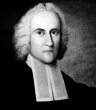
Jonathan Edwards
"It is evident, by both Scripture and reason, that God is infinitely, eternally, unchangeably, and independently glorious and happy: that He cannot be profited by, or receive any thing from, the creature"(Edwards, Works, 97).
"As it is fit that God should love and esteem His own excellence, it is also fit that He should value and esteem the love of His excellency. And if it becomes a being highly to value Himself, it is fit that He should love to have Himself valued and esteemed"(Edwards, Works, 99).
"Another part of God's fulness which He communicates, is His happiness. This happiness consists in enjoying and rejoicing in Himself; and so does also the creature's happiness. It is a participation of what is in God; and God and His glory are the objective ground of it. The happiness of the creature consists in rejoicing in God; by which also God is magnified and exalted"(Edwards, Works, 101).
"God seeking Himself in the creation of the world, in the manner which has been supposed, is so far from being inconsistent with the good of the creatures, that it is a kind of regard to Himself that inclines Him to seek the good of the creature"(Edwards, Works, 103).
"The exercise of true religion and virtue in Christians is summarily expressed by their glorifying God"(Edwards, Works, 108).
"God's respect to the creature's good, and His respect to Himself, is
not a divided respect; but both are united in one, as the happiness of the creature aimed
at is happiness in union with Himself"(Edwards, Works, 120).
William Gurnall
"The devil can show a man a way to damnation through duties and ordinances
of God's worship"(Gurnall, Gleanings , 12).
"Knowledge may make thee a scholar, but not a saint; orthodox, but not
gracious"(Gurnall, Gleanings , 18).
"It should be our care, if we would not yield to the sin, not to walk by, or sit at
the door of the occasion . . . If we mean not to be burnt, let us not walk upon the coals
of temptation"(Gurnall, Gleanings , 58).
"Be sure thou art watchful more than ordinary over thyself, in those things
where thou findest thyself weakest and hast been oftenest foiled. The weakest part of a
city needs the strongest guard"(Gurnall, Gleanings , 59).
"Cease to pray and thou wilt begin to sin"(Gurnall, Gleanings , 145).
Michael Horton
"The clear message from Genesis to Revelation is either go to hell with your
own righteousness, or go to heaven with the righteousness of Christ credited to your
account by faith alone. Faith in Christ is saving; faith in anything or anyone else is
superstition"(Horton, In The Face Of God , 20).
"getting 'close to God' without carefully defining who He is, without
knowing whether He can be approached at all, and without understanding how to approach Him
is an immense risk"(Horton, In The Face Of God , 46).
"He suffered as God because only God had the power to save; He suffered as
Man because only man owed the debt"(Horton, In The Face Of God , 123).
"when the minister is faithfully proclaiming the text, drawing on his careful study
of the original languages, possible alternative interpretations, and other tools of
pastoral scholarship, he is addressing Christ's people in the voice of God
Himself"(Horton, In The Face Of God , 135).
"(Suffering) strips us of our pride, self-sufficiency, complacency, and our oblivion
to the things to come. Eternity is more deeply engraved on the rough palms of God's
suffering children"(Horton, In The Face Of God , 176).
"Biblical religion does not call us simply to a better way of being preoccupied with
self, but judges the entire enterprise"(Horton, In The Face Of God , 181).

"Grace is but glory begun, and glory is but grace perfected"(Love, Grace, 62).
"Men who have the greatest strength of grace are likely to meet with the fiercest assaults and strongest temptations from the devil"(Love, Grace, 80).
"It is a good rule that the works of the blessed Trinity are undivided . . . So we may say that whatever things the Father does the Son does likewise, and those things the Holy Ghost does also"(Love, Grace, 157).
"We should strive to get heaven, as if it were to be gotten by our fingers, by our own pains . . . Yet, when you have done all you can, you must acknowledge grace to be free, as if you had not laboured at all"(Love, Grace, 169, 170).
"You may sin by your own strength; but you cannot mortify sin but by the strength of the Spirit"(Love, The Mortified Christian, 3).
"Count not the restraining of sin from coming into action to be a real mortifying of sin . . . A lion confined within the gates is a lion still, though he cannot go about to devour his prey; similarly, though men are restrained from acting out those sins to which they are inclined, yet the restraint of sin is not to be taken for the mortifying of sin"(Love, The Mortified Christian, 16).
"Whenever you go about to mortify any one particular lust, you should labour to bewail the whole body of sin that is in you and to strike at the very root of sin"(Love, The Mortified Christian, 21).
"As God commands His children to obey Him, so He conveys power and ability to enable them to do what He commands"(Love, The Mortified Christian, 29).
"(Mortification) is a holy disposition in a regerate man derived from the efficacy and virtue of Christ's death, whereby the strength of sin is weakened and the dominion of it destroyed"(Love, The Mortified Christian, 32).
"Oh, what a good Master we serve, who does our work for us and yet pays us our wages! Though He Himself does all for us and we do nothing, yet He rewards us as if we had done it ourselves"(Love, The Mortified Christian, 44).
"Many men, after a long conversion, see more of the workings of sin in their hearts than ever they did before or at their first conversion. Now, such men have not an increase of sin, but an increase of illumination and light"(Love, The Mortified Christian, 47).
"It is an easier matter to keep an enemy out than to thrust him out when he is already in. You should keep your souls, as it were, in a garrison. Do not give way to sin, but resist and oppose it in its first motion"(Love, The Mortified Christian, 81).
"There is never a mortified man who has not been a praying man. Subduing lust can never be obtained without prayer"(Love, The Mortified Christian, 81).
"Sanctification consists of two parts: mortification, or a dying unto sin, and vivification, or a living unto God"(Love, The Mortified Christian, 89).
"Should the Lord be strict to mark what you do amiss, and requite every injury done to Him into your bosom, you would have been long ago thrown into hell"(Love, The Mortified Christian, 116).
John MacArthur
"Salvation is impossible apart from divinely wrought regeneration"(MacArthur, The Gospel According To Jesus, 44).
"If . . . salvation is truly a work of God, it cannot be defective. It cannot fail to impact an individual's behaviour. It cannot leave his desires unchanged or his conduct unaltered. It cannot result in a fruitless life"(MacArthur, The Gospel According To Jesus, 74).
"Nothing in Scripture indicates the church should lure people to Christ by presenting Christianity as an attractive option . . . The Church must realize that its mission has never been public relations or sales; we are called to live holy lives and declare God's raw truth--lovingly but uncompromisingly--to an unbelieving world"(MacArthur, Ashamed of the Gospel, 72).
"If we concern ourselves with the depth of our ministry, God will see to the breadth of it. If we minister for spiritual growth, numerical growth will be what God chooses it to be"(MacArthur, Ashamed of the Gospel, 74).
"We can't stimulate genuine growth by clever persuasion or inventive techniques. It is the Lord who adds to the church (Acts 2:47). Human methodologies cannot accelerate or supersede the divine process. Any additional growth they produce is a barren imitation"(MacArthur, Ashamed of the Gospel, 84).
"The philosophy that marries marketing technique with church growth theory is the result of bad theology. It assumes that if you package the gospel right, people will get saved. It is rooted in Arminianism, which makes the human will, not a sovereign God, the decisive factor in salvation . . . The goal of market-driven ministry is an instantaneous human decision, rather than a radical transformation of the heart wroght by Almighty God through the Holy Spirit's convicting work and the truth of His Word. An honest belief in the sovereignty of God in salvation would bring an end to a lot of the nonsense that is going on in the church"(MacArthur, Ashamed of the Gospel, 85).
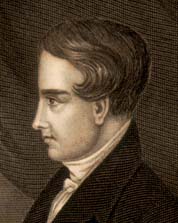
Robert McCheyne
"One who is truly saved looks far above man, to Jesus, and says, 'To Him be glory.'"(McCheyne, The Believer's Joy, 69).
"He died, not merely to redeem you from hell, but to bring you back to the image of His Father; to make you holy and happy"(McCheyne, The Believer's Joy, 91).
"When a man's eye is closed on Christ and the eternal world, he cannot stand the shock of afflictions; but if his eyes clearly see Jesus, you may take away houses and lands, his dearest earthly possessions, his loved ones, still his chief treasure is untouched"(McCheyne, The Believer's Joy, 101).
"We cannot speak of the hidden manna unless we have the taste of it in our mouth. We cannot speak of the living water unless it be springing up within us"(McCheyne, The Believer's Joy, 111).
"The purest joy in the world is joy in Christ Jesus"(McCheyne, The Believer's Joy, 119).

"A Christian is a disciple of Jesus Christ, one who believes in and follows
Christ"(Mead, The Almost Christian , 3).
"where knowledge is joined with zeal, that makes a true
Christian"(Mead, The Almost Christian , 16).
"He only knows God aright who knows how to obey Him, and obeys according to his
knowledge of Him"(Mead, The Almost Christian , 18).
"To confess Christ is to choose His ways and to own them. To profess Christ is to
plead for His ways and yet live beside them . . . To profess Christ is to own Him when
none deny Him; to confess Christ is to plead for Him and suffer for Him when others oppose
Him . . . Profession is swimming down the stream. Confession is a swimming against the
stream"(Mead, The Almost Christian , 28).
"True saving faith, such is the faith of God's elect, cannot die. It may fail in the
act but not in the habit. The sap may not be in the branch but it is always in the
root"(Mead, The Almost Christian , 71).
"There can be no better evidence of the Spirit of Christ in us than to love the image
of Christ in others"(Mead, The Almost Christian , 74).
"It is our faith, our love, and our fear of God, that makes our duties
good"(Mead, The Almost Christian , 84).
"Delight in God is one of the highest exercises of grace"(Mead, The Almost
Christian , 85).
"if (Satan) cannot keep sinners in their open profaneness, then he labours to
persuade them to take up with a form of godliness"(Mead, The Almost Christian
, 117).
"Now many embrace Christ as a Priest but they do not own Him as a King and Prophet.
They like to share in His righteousness but not to partake of His holiness. They would be
redeemed by Him but they would not submit to them. They would be saved by His blood but
would not submit to His power. Many love the privileges of the gospel but not the duties
of the gospel"(Mead, The Almost Christian , 130).
"The altogether Christian makes God's glory the chief end of all his
performances"(Mead, The Almost Christian , 133).
"The profit of godliness lies not only in this world but in the world to come. All
other profit lies in this world only"(Mead, The Almost Christian , 152).
"The saint's peace is a peace with God but not with sin. The sinner's peace is a
peace with sin but not with God"(Mead, The Almost Christian , 161).
"Be convinced of the utter insufficiency and inability of anything below Christ Jesus
to minister relief to your soul"(Mead, The Almost Christian , 164).

"Sanctification . . . is the universal renovation of our natures by
the Holy Spirit into the image of God, through Jesus Christ"(Owen, Works ,
III:386).
"The first and principal duty of a pastor is to feed the flock by diligently
preaching of the Word"(Owen, Works , XVI:74).
"A man preacheth that sermon only well unto others which preacheth itself in
his own soul . . . And he that doth not feed on and thrive in the digestion of the food
which he provides for others will scarce make it savoury unto them; yea, he knows not but
that the food he hath provided may be poison unless he have really tasted of it
himself"(Owen, Works, XVI:76).
"I do not understand how a man can be a true believer unto whom sin
is not the greatest burden, sorrow, and trouble"(Ryle, Holiness, 38 [quoting
John Owen]).
J.I. Packer
"Ease and luxury, such as our affluence brings today, do not make for
maturity; hardship and struggle however do"(Packer, A Quest For Godliness ,
22).
"The church . . . is a hospital in which nobody is completely well, and anyone can
relapse at any time"(Packer, A Quest For Godliness , 65).
"forcing tactics can only do damage, perhaps incalculable damage, to men's souls . .
. Evangelism must rather be conceived as a long-term enterprise of patient teaching and
instruction, in which God's servants seek simply to be faithful in delivering the gospel
message and applying it to human lives, and leave it to God's Spirit to draw men to faith
through this message in his own way and at his own speed"(Packer, A Quest For
Godliness , 164).
"If we do not preach about sin and God's judgment on it, we cannot present Christ as
Saviour from sin and the wrath of God. And if we are silent about these things, and preach
a Christ who saves only from self and the sorrows of this world, we are not preaching the
Christ of the Bible . . . Such preaching may soothe some, but it will help nobody; for a
Christ who is not seen and sought as a Saviour from sin will not be found to save from
self or from anything else"(Packer, A Quest For Godliness , 164, 165).
"Holiness is both God's promised gift and man's prescribed duty"(Packer, A
Quest For Godliness , 198).
"The continual assistance (of grace) will be withheld from those who forget their
need of it and omit to ask for it"(Packer, A Quest For Godliness , 199).
"Sanctification has a double aspect. Its positive side is vivification, the growing
and maturing of the new man; its negative side is mortification, the weakening and killing
of the old man"(Packer, A Quest For Godliness , 199).
"Mortification is more than the mere suppression, or counteraction, of sinful
impulse. It is nothing less than a gradual eradication of it"(Packer, A Quest For
Godliness , 200).
"The activity by which the Christian directly secures the mortification of his sins
is prayer"(Packer, A Quest For Godliness , 200).
"A spiritual gift is an ability, divinely bestowed and sustained, to grasp and
express the realities of the spiritual world, and the knowledge of God in Christ, for the
edifying both of others and of oneself"(Packer, A Quest For Godliness ,
225).
"We do not keep the Sabbath holy by lounging around doing nothing. We are to rest
from the business of our earthly calling in order to prosecute the business of our
heavenly calling. If we do not spend the day doing the latter, we fail to keep it
holy"(Packer, A Quest For Godliness , 239).
"the battle for our Sundays is usually won or lost on the foregoing Saturday night,
when time should be set aside for self-examination, confession and prayer for the coming
day"(Packer, A Quest For Godliness , 241).
"We complain today that ministers do not know how to preach; but is it not equally
true that our congregations do not know how to hear?"(Packer, A Quest For
Godliness , 254).
"When the preacher has finished instructing, applying and exhorting, his pulpit work
is done. It is not his business to devise devices in order to extort 'decisions'. He would
be wiser to go away and pray for God's blessing on what he has said"(Packer, A
Quest For Godliness , 284).
"Doctrinal preaching certainly bores the hypocrites; but it is only doctrinal
preaching that will save Christ's sheep. The preacher's job is to proclaim the faith, not
to provide entertainment for unbelievers--in other words, to feed the sheep rather than
amuse the goats"(Packer, A Quest For Godliness , 285).
"It is a fact of Christian history that those who are consciously worshipping a great
God do not find that worship services lasting two or three hours are a bore; on the
contrary, they are experienced as a joy . . . By comparison, the modern Western passion
for services lasting not more than sixty minutes raises the suspicion that both our God
and our own spiritual statues are rather small"(Packer, A Quest For Godliness
, 334).

John Piper
"Evangelism and missions are not imperiled by the biblical truth of
election, but empowered by it, and their triumph is secured by it"(Piper, The
Pleasures of God , 149).
"God is not displeased with the strength of a horse and the legs of a man as
good things that He has made. He is displeased with those who hope in their horses and in
their legs. He is displeased with the people who put their hope, for example, in missiles
or in make-up, in tanks or tanning parlors, in bombs or body-building. God takes no
pleasure in corporate efficiency or balanced budgets or welfare systems or new vaccines or
education or eloquence or artistic excellence or legal processes, when these things are
the treasure in which we hope, or the achievement in which we boast. Why? Because when we
put our hope in horses and legs, then the horses and legs get the glory, not
God"(Piper, The Pleasures of God , 208).
"God has no needs that I could ever be required to satisfy. God has no
deficiencies that I might be required to supply. He is complete in Himself. He is
overflowing with happiness in the fellowship of the Trinity"(Piper, The Pleasures
of God , 215).
"God is the kind of God who will be pleased with the one thing I have to
offer--my thirst"(Piper, The Pleasures of God , 216).
"an act which is good in itself can become displeasing to God when it is
done with the wrong inner disposition"(Piper, The Pleasures of God , 217).
"We glorify God when our service comes from faith in His strength, because
the one who gives the strength gets the glory"(Piper, The Pleasures of God ,
219).
"Prayer is one of God's appointed means of bringing the elect to
faith"(Piper, The Pleasures of God , 224).
"(Prayer) is a wartime walkie talkie for spiritual warfare, not a domestic
intercom to increase the comforts of the saints"(Piper, The Pleasures of God
, 232).
"Grace is power, not just pardon"(Piper, The Pleasures of God
, 252).
"Faith is being satisfied with all that God is for us in Christ"(Piper,
The Pleasures of God , 254).
"Sin is what you do when your heart is not satisfied with God"(Piper, Future Grace, 9).
"By grace I do not merely mean the pardon of God in passing over your sins, but also the power and beauty of God to keep you from sinning"(Piper, Future Grace, 13).
"The challenge is not merely to pursue righteousness, but to prefer righteousness"(Piper, Future Grace, 338).
"Our deeds are not the basis of our salvation, they are the evidence of our salvation. They are not foundation, they are demonstration"(Piper, Future Grace, 364).
"'Delight yourself in the Lord' . . . is a radical call to pursue your fullest satisfaction in all that God promises to be for you in Jesus"(Piper, Future Grace, 399).
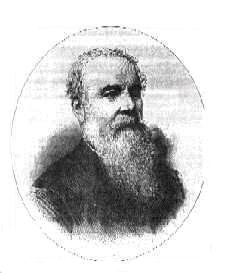
J.C. Ryle
"Sin . . . consists in doing, saying, thinking, or imagining anything that is not in perfect conformity with the mind and law of God"(Ryle, Holiness, 2).
"Sin is a disease which pervades and runs through every part of our moral constitution and every faculty of our minds"(Ryle, Holiness, 3).
"People will never set their faces decidedly towards heaven and live like pilgrims, until they really feel that they are in danger of hell"(Ryle, Holiness, 10).
"The instrument by which the Spirit effects (sanctification) is generally the Word of God"(Ryle, Holiness, 16).
"Justification is the reckoning and counting a man to be righteous for the sake of another, even Jesus Christ the Lord. Sanctification is the actual making a man inwardly righteous, though it may be in a very feeble degree"(Ryle, Holiness, 29).
"Holiness is happiness, and that man who gets through life most comfortably is the sanctified man"(Ryle, Holiness, 31).
"Holiness is the habit of being of one mind with God, according as we find His mind described in Scripture. It is the habit of agreeing in God's judgment, hating what He hates, loving what He loves, and measuring everything in this world by the standard of His Word"(Ryle, Holiness, 34).
"Holiness comes from Christ. It is the result of vital union with Him. It is the fruit of being a living branch of the true Vine"(Ryle, Holiness, 48).
"A religion that costs nothing is worth nothing! A cheap Christianity, without a cross, will prove in the end a useless Christianity, without a crown"(Ryle, Holiness, 70).
"Growth in grace is one way to be happy in our religion. God has wisely linked together our comfort and our increase in holiness"(Ryle, Holiness, 84).
R.C. Sproul
We talk about predestination because the Bible talks about predestination. If we
desire to build our theology on the Bible, we run head on into this concept. We soon
discover that John Calvin did not invent it"(Sproul, Chosen By God , 10).
"If we are to be biblical . . . the issue is not whether we should have a doctrine of
predestination or not, but what kind we should embrace"(Sproul, Chosen By God
, 11).
"What predestination means, in its most elementary form, is that our final
destination, heaven or hell, is decided by God . . . He chose some individuals to be saved
unto everlasting blessedness in heaven and others He chose to pass over, to allow them to
follow the consequences of their sins into eternal torment in hell"(Sproul, Chosen
By God , 22).
"If it is true that in some sense God foreordains everything that comes to pass, then
it follows with no doubt that God must have foreordained the entrance of sin into the
world. That is not to say that God forced it to happen or that He imposed evil upon His
creation. All it means is that God must have decided to allow it to happen"(Sproul, Chosen
By God , 31).
"Is there any reason that a righteous God ought to be loving toward a creature who
hates Him and rebels constantly against His divine authority and holiness?"(Sproul, Chosen
By God , 33).
"if the final decision for the salvation of fallen sinners were left in the hands of
fallen sinners, we would despair all hope that anyone would be saved"(Sproul, Chosen
By God , 33).
"Calvinism assumes that without the intervention of God no one will ever want Christ.
Left to themselves, no one will ever choose Christ"(Sproul, Chosen By God ,
34).
"We are free, but there are limits to are freedom. The ultimate limit is the
sovereignty of God"(Sproul, Chosen By God , 42).
"We do not believe in order to be born again; we are born again in order that we may
believe"(Sproul, Chosen By God , 73).
"Total depravity is not utter depravity. Utter depravity would mean that we are all
as sinful as we possibly could be"(Sproul, Chosen By God , 104).
"For a work to be considered good it must not only conform outwardly to the law of
God, but it must be motivated inwardly by a sincere love for God"(Sproul, Chosen
By God , 107).
"God's grace is resistible in the sense that we can and do resist it. It is
irresistible in the sense that it achieves its purpose. It brings about God's desired
effect"(Sproul, Chosen By God , 120).
"All that God has to do to harden people's hearts is to remove the restraints. He
gives them a longer leash. Rather than restricting their human freedom, He increases it.
He lets them have their own way . . . It is not that God puts His hand on them to create
fresh evil in their hearts; He merely removes His holy hand of restraint from them and
lets them do their own will"(Sproul, Chosen By God , 145).
"Sin is cosmic treason. Sin is the treason against a perfectly pure Sovereign. It is
an act of supreme ingratitude toward the One to whom we owe everything, to the One who has
given us life itself"(Sproul, The Holiness of God , 116).
"If God is holy at all, if God has an ounce of justice in His character, indeed if
God exists as God, how could He possibly be anything else but angry with us? We violate
His holiness; we insult His justice; we make light of His grace. These things can hardly
please Him"(Sproul, The Holiness of God , 176).

Charles Spurgeon
"The salvation of God is for those who do not deserve it and have no
preparation for it"(Spurgeon, All Of Grace , 13).
"What is it to believe in Him? It is not merely to say 'He is God and the Saviour',
but to trust in Him wholly and entirely and take Him for all your salvation from this time
forth and forever as your Lord, your Master, your all"(Spurgeon, All Of Grace
, 32).
"We can never be happy, restful, or spiritually healthy till we become
holy"(Spurgeon, All Of Grace , 34).
"Justification without sanctification would be no salvation at all. It would call the
leper clean and leave him to die of his disease; it would forgive the rebellion and allow
the rebel to remain an enemy to his king . . . Remember that the Lord Jesus came to take
away sin in three ways. He came to remove the penalty of sin, the power of sin, and last,
the presence of sin"(Spurgeon, All Of Grace , 35).
"If you yield yourself up to the divine working, the Lord will alter your
nature"(Spurgeon, All Of Grace , 39).
"Faith is believing that Christ is what He is said to be and that He will do
what He promised to do, and then expect this of Him"(Spurgeon, All Of Grace
, 48).
"Faith which refuses to obey the commands of the Saviour is a mere pretense
and will never save the soul"(Spurgeon, All Of Grace , 57).
"Faith saves us because it makes us cling to God and therefore brings us
into connection with Him"(Spurgeon, All Of Grace , 61).
"To repent is to change your mind about sin and Christ and all the great
things of God"(Spurgeon, All Of Grace , 70).
"Repentance will not make you see Christ, but to see Christ will give you
repentance"(Spurgeon, All Of Grace , 72).
"You must be divorced from your sin or you cannot be married to
Christ"(Spurgeon, All Of Grace , 76).
"There never was a person who did unfeignedly repent of sin with believing repentance
who was not forgiven. On the other hand, there never was a person forgiven who had not
repented of his sin"(Spurgeon, All Of Grace , 97).
"Remember first, that forgiveness leads to repentance"(Spurgeon, All Of
Grace , 97).
"(Repentance) is a change of mind of the most radical sort, and it is attended with
sorrow for the past and a resolve of amendment in the future"(Spurgeon, All Of
Grace , 99).
"True religion is supernatural at its beginning, supernatural in its continuance, and
supernatural in its close. It is the work of God from first to last"(Spurgeon, All
Of Grace , 114).
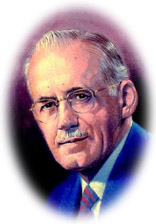
A.W. Tozer
"What comes into our minds when we think about God is the most important thing about us"(Tozer, The Knowledge of the Holy, 1).
"The idolatrous heart assumes that God is other than He is--in itself a monstrous sin--and substitutes for the true God one made after its own likeness. Always this God will conform to the image of the one who created it and will be base or pure, cruel or kind, according to the moral state of the mind from which it emerges"(Tozer, The Knowledge of the Holy, 4).
"The essence of idolatry is the entertainment of thoughts about God that are unworthy of Him"(Tozer, The Knowledge of the Holy, 5).
"The heaviest obligation lying upon the Christian Church today is to purify and elevate her concept of God until it is once more worthy of Him"(Tozer, The Knowledge of the Holy, 6).
"Holy is the way God is. To be holy He does not conform to a
standard. He is the standard"(Tozer, The Knowledge of the Holy, 165).

"God does not find us worthy, but makes us worthy. If we never come
to Christ to be healed till we are worthy, we must never come"(Watson, Gleanings
, 21).
"Faith alone justifies, but justifying faith is not alone. Good works though they are
not the causes of salvation, yet they are the evidences. Faith must not be built upon
works, but works must be built upon faith"(Watson, Gleanings , 24).
"Discontent is an ungrateful sin, because we have more mercies than
afflictions; and it is an irrational sin, because afflictions work for good"(Watson, Gleanings
, 38).
"the Lord may bruise us by afflictions, but it is to enrich us; these
afflictions work for us a weight of glory"(Watson, Gleanings , 39).
"If God should show mercy to such only as are worthy, He would show none at
all"(Watson, Gleanings , 42).
"If God sees it good to strike with one hand, He will support with the
other"(Watson, Gleanings , 63).
"Affliction is light in comparison of hell"(Watson, Gleanings , 73).
"Our sufferings may be lasting, not everlasting"(Watson, Gleanings ,
73).
"The devil baits his hook with religion"(Watson, Gleanings ,
80).
"Prayer is the best antidote against temptation"(Watson, Gleanings
, 83).
"It is better to have God approve, than the world applaud"(Watson, Gleanings
, 92).
"Ministers may set the food of the word before you, and carve it out to you;
but it is only Christ can cause you to taste it"(Watson, Gleanings , 93).
"If, when God speaks to us in His word, we are deaf, when we speak to Him in
prayer, He will be dumb"(Watson, Gleanings , 96).
"A godly man is a praying man"(Watson, Gleanings , 97).
(Acts 12:5-7) "The angel fetched Peter out of prison, but it was prayer that fetched
the angel"(Watson, Gleanings , 100).
"A believer's dying day is his ascension day to glory"(Watson, Gleanings
, 117).
"The soul is never satisfied till it has God for its portion, and heaven for its
haven"(Watson, Gleanings , 128).
"Toleration is the grave of reformation. By toleration we adopt other men's sins, and
make them our own"(Watson, Gleanings , 134).
"A godly man is a heavenly man; heaven is in him, before he is in
heaven"(Watson, Gleanings , 135).
"True faith will trust God where it cannot trace Him"(Watson, Gleanings
, 136).
"Affliction is a bitter root, but it bears sweet fruit"(Watson, Gleanings
, 136).
"None so empty of grace as he that thinks he is full"(Watson, Gleanings
, 139).
"God's rod is a pencil to draw Christ's image more distinctly upon
us"(Watson, Gleanings , 141).
"Affliction is God's flail to thresh off the husks, not to consume the precious
grain"(Watson, Gleanings , 141).
"Fiery trials make golden Christians"(Watson, Gleanings , 141).
"Sin . . . puts a Christian out of tune so that he is not fit for prayer or praise"(Watson, The Mischief of Sin, 7).
"Sin is a walking contrariness to God"(Watson, The Mischief of Sin, 21).
"The best way to combat sin is upon our knees"(Watson, Heaven Taken By Storm, 10).
"When we come to the Word preached, we come to a matter of the highest importance; therefore we should stir up ourselves and hear with the greatest devotion"(Watson, Heaven Taken By Storm, 16).
"The devil is not one who refuses to come to church; he attends, but not with any good intent; he takes away the Word from men"(Watson, Heaven Taken By Storm, 17).
"Lifeless prayer is no prayer than the picture of a man is a man. To say a prayer is not to pray; Aschanius taught his parrot the Lord's Prayer . . . It is the violence and wrestling of the affections that make it a prayer, else it is no prayer"(Watson, Heaven Taken By Storm, 20).
"(Meditation) is a holy exercise of the mind whereby we bring the truths of God to remembrance, and do seriously ponder upon them and apply them to ourselves"(Watson, Heaven Taken By Storm, 23).
"The world is a great inn; we are guests in this inn. Travellers, when they are met in their inn, do not spend all their time in speaking about the inn; they are to lodge there but a few hours and are gone. They speak about their home and the country to which they are travelling. So when we meet together, we should not be talking only about the world; we are to leave this presently. We should talk about our heavenly country"(Watson, Heaven Taken By Storm, 38).
"What Satan cannot do by force, he will endeavour to do by fraud"(Watson, Heaven Taken By Storm, 40).
"Out of the bitterest drink God distils His glory and our salvation. Jerome says that what the world looks upon as punishment, God makes a medicine to heal the sore"--Thomas Watson(Sermons of the Great Ejection, 123).
"The Scripture is both a glass to show your spots, and a laver to wash them away."--Thomas Watson(Sermons from the Great Ejection, 137).
"Be more afraid of sin than of suffering. A man may be afflicted, and yet have the love of God; but if he sin, immediately God is angry"--Thomas Watson(Sermons of the Great Ejection, 142).
"In Noah's days . . . the whole world was drowned in sin before it was drowned in water"(Watson, Religion Our True Interest, 2).
"The more outrageous others are in sin, the more courageous we should be for the truth"(Watson, Religion Our True Interest, 2).
"Sin is never the better because it is in fashion, nor will this plea hold at the last day, that we did as the majority. God will say, seeing you sinned with the multitude, you shall go to Hell with the multitude"(Watson, Religion Our True Interest, 4).
"There is a difference between fearing God, and being afraid of God; the Godly fear God as a child does his father, the wicked are afraid of God as the prisoner is of the judge"(Watson, Religion Our True Interest, 9).
"Fear preserves seriousness, faith preserves cheerfulness. Fear is as lead to the net to keep a Christian from floating in presumption, and faith is as cork to the net to keep him from sinking in despair"(Watson, Religion Our True Interest, 10).
"Men fear not God because they presume of his mercy"(Watson, Religion Our True Interest, 14).
"Fear begets prayer, and prayer engages the help of Heaven"(Watson, Religion Our True Interest, 25).
"There is more evil in a drop of sin, than in a sea of affliction"(Watson, Religion Our True Interest, 26).
"A fearer of God steers the rudder of his life according to the compass of the Word"(Watson, Religion Our True Interest, 30).
"If Satan cannot take a Christian away from duty, he will put him on too far in duty"(Watson, Religion Our True Interest, 34).
"A person deeply in love cannot keep his thoughts from the object he loves. The reason we think on God no more, is, because we love Him no more"(Watson, Religion Our True Interest, 71).
"God has no need of our services; He is infinitely blessed in
reflecting upon the splendour of His own infinite being: we cannot add the least cubit to
His essential glory"(Watson, Religion Our True Interest, 77).
"If the Lord be on our side He can save us in that very way in which we
think He will destroy us. Would not any have thought the whale's belly should have been
Jonah's grave? But God made the fish a ship, in which he sailed to the shore . . . If the
Lord of Hosts be on our side, He can make the Church's affliction a means of her
augmentation, 'The more they afflicted them, the more they
multiplied'(Ex.1:12)"(Watson, Religion Our True Interest, 91).
"We are not free from God's anger as a father, but as a judge. God will not pour His vindictive justice upon us. Christ has drunk the red wine of God's wrath upon the cross, that believers may not taste a drop of it"(Watson, Religion Our True Interest, 95).
"Once in Christ and ever in Christ. A star may sooner fall out of its orb than a true believer be plucked away from God"(Watson, Religion Our True Interest, 96).
"Death breaks the union between the body and the soul, but perfects the union between God and the soul"(Watson, Religion Our True Interest, 96).
"Discord among Christians brings a reproach upon religion, advances Satan's kingdom, hinders the growth of grace"(Watson, Religion Our True Interest, 106).
"God sometimes accepts of willingness without the work (1Kings 8:18; 1Chr.28:9), but never of the work without willingness"(Watson, Religion Our True Interest, 114).
"Affliction promotes holiness: The more the diamond is cut, the more it sparkles"(Watson, Religion Our True Interest, 123).
"This is our sin, we grieve more for one loss, than we are thankful for a hundred mercies"(Watson, Religion Our True Interest, 126).
"God never promised us a charter of exemption from trouble, but He has promised to be with us in trouble"(Watson, Religion Our True Interest, 126).
"God's afflictive providences are the strokes of a father, not the wounds of an enemy . . . Out of the bitterest drug God distils His glory, and our happiness"(Watson, Religion Our True Interest, 128).

George Whitefield to John Wesley, "Man is nothing: he hath a free
will to go to hell, but none to go to heaven, till God worketh in him to will and to do
his good pleasure"(Dallimore, George Whitefield , 407).
Bibliography
Baxter, Richard. Practical Works of Richard Baxter . London: George
Virtue, 1838.
Baxter, Richard. The Reformed Pastor . London: Banner of Truth, 1974.
Begg, Alistair. Made For His Pleasure . Chicago: Moody Press, 1996.
Begg, Alistair. What Angels Wish They Knew . Chicago: Moody Press, 1998.
Boettner, Loraine. The Reformed Doctrine of Predestination . Philadelphia: The
Presbyterian & Reformed Publishing Company, 1976.
Boice, James Montgomery. Mind Renewal In A Mindless Age . Grand Rapids: Baker
Books, 1994.
Boice, James Montgomery. Standing On The Rock . Grand Rapids: Baker Books, 1994.
Boice, James Montgomery. Whatever Happened to the Gospel of Grace? Wheaton: Crossway Books, 2001.
Bridges, Jerry. The Joy of Fearing God. Colorado Springs: Waterbrook Press, 1997.
Burroughs, Jeremiah. Gospel Worship. Morgan, PA: Soli Deo Gloria, 1996.
Calvin, John. The Epistles of Paul the Apostle to the Romans and to the
Thessalonians . trans. Ross MacKenzie. Grand Rapids: William B. Eerdmans, 1973.
Calvin, John. Institutes of the Christian Religion . Philadelphia: The
Westminster Press.
Carson, D.A. How Long, O Lord? Grand Rapids: Baker Books, 1990.
Carson, D.A. The Difficult Doctrine of the Love of God. Wheaton: Crossway
Books, 2000.
Dallimore, Arnold. George Whitefield . Edinburgh: Banner of Truth, 1970.
Edwards, Jonathan. The Works of Jonathan Edwards. Carlisle, PA: The Banner of
Truth Trust, 1990.
Gleanings from William Gurnall . Morgan, PA: Soli Deo Gloria, 1996.
Horton, Michael. In The Face Of God . Dallas: Word Publishing, 1996.
Love, Christopher. Grace: The Truth, Growth, and Different Degrees. Morgan, PA: Soli Deo Gloria, 1997.
Love, Christopher. The Mortified Christian. Morgan, PA: Soli Deo Gloria, 1998.
MacArthur, John F. Ashamed of the Gospel. Wheaton: Crossway Books, 1993.
MacArthur, John F. The Gospel According To Jesus.Grand Rapids: Zondervan Publishing House, 1988.
McCheyne, Robert Murray. The Believer's Joy. Glasgow: Free Presbyterian
Publications, 1987.
Mead, Matthew. The Almost Christian . Morgan, PA: Soli Deo Gloria, 1989.
Owen, John. Works . ed William Goold. Edinburgh: Johnstone and Hunter, 1850-53.
Packer, J.I. A Quest For Godliness . Wheaton: Crossway Books, 1990.
Piper, John. Future Grace. Portland: Multnomah Publishers, 1995.
Piper, John. The Pleasures of God . Portland: Multnomah Publishers, 1991.
Ryle, J.C. Holiness. Grange Close: Evangelical Press, 1999.
Sermons of the Great Ejection. London: The Banner of Truth Trust, 1962.
Sproul, R.C. Chosen By God . Wheaton: Tyndale House Publishers, 1986.
Sproul, R.C. The Holiness of God . Second edition. Wheaton: Tyndale House
Publishers, 1998.
Spurgeon, Charles H. All Of Grace . Chicago: Moody Press, 1992.
Tozer, A.W. The Knowledge Of The Holy. New York: HarperCollins, 1961.
Gleanings from Thomas Watson . Morgan, PA: Soli Deo Gloria, 1995.
Watson, Thomas. The Mischief of Sin. Morgan, PA: Soli Deo Gloria, 1994.
Watson, Thomas. Heaven Taken By Storm. Morgan, PA: Soli Deo Gloria, 1994.
Watson, Thomas. Religion Our True Interest. Edinburgh: Blue Banner
Productions, 1992.
Wells, David. God In The Wasteland: The Reality Of Truth In A World Of Fading Dreams
. Grand Rapids: William B. Eerdmans, 1994.